
When we bought this house in 2010, we were advised that the septic system (built with the house in 1968) was on its last legs. We squeezed another 16 years out of it, but we were advised last November that it was beginning to fail. It was, as you can imagine, a hugely expensive job and a heck of a mess. My silver lining through the cost and the chaos was the idea that I’d have a fresh slate to do something I’ve wanted to do for years: turn our turf lawn into a native plant garden.
I’ve been slowly letting nature reclaim the turf lawn over a few years, part by circumstance and then more intentionally. We had to re-grade the back yard to build a swale in 2020 and a biblical downpour literally an hour after the contractor laid the seeds washed most of them quite effectively down the new swale and the driveway and out into the road. Good news, new swale works. Bad news, no grass seed. I tried to overseed and tend what was left, but it was patchy at best. To my unanticipated delight, six years later the back yard is a carpet of native plants like violets, delicious wild strawberries, yarrow, self heal, mock strawberries and (to be honest) a lot of things that are probably actually weeds, including a lot of dandelions. But I still prefer it over the monoculture of a manicured lawn, and it requires a LOT less mowing, watering and tending. And it’s host to all sorts of critters: toads and cottontails and a family of cardinals and fireflies, to name just a few.
So, when we learned we’d have to destroy a couple thousand square feet of lawn, I knew I didn’t want to re-sod or re-seed it with turf. I’d take the opportunity to make a beautiful native plant garden. How hard could it be? (Narrator’s voice: hard. It would be very hard, and not inexpensive.)
I figured I’d document the process, both because I could use some input from those of you with experience and insight, and also because this is something I’m truly passionate about: that the modern turf lawn is a waste of resources (water, chemicals, maintenance) and monoculture is bad for the ecosystem.
So, over the summer and probably the next few years, I’ll be digging and sweating and documenting our journey. It started with chaos and destruction, as all good stories do. We hired Jeff at J.D. Duke Construction to do the septic work because he had done such a stellar job in fixing our grade problems in 2020. He worked with us to find the best system for our property and our budget, and was accommodating and professional every step of the way. He handled everything from permits to the engineering assessment and design to the excavation and installation to making the ground ready for landscaping with fresh topsoil. He’s a super hard worker and a genuinely nice human, so if you need septic work or any sort of major excavation work done in Ottawa, I highly recommend JD Duke Construction. Having someone we could trust for a major expense like septic replacement was such a relief.
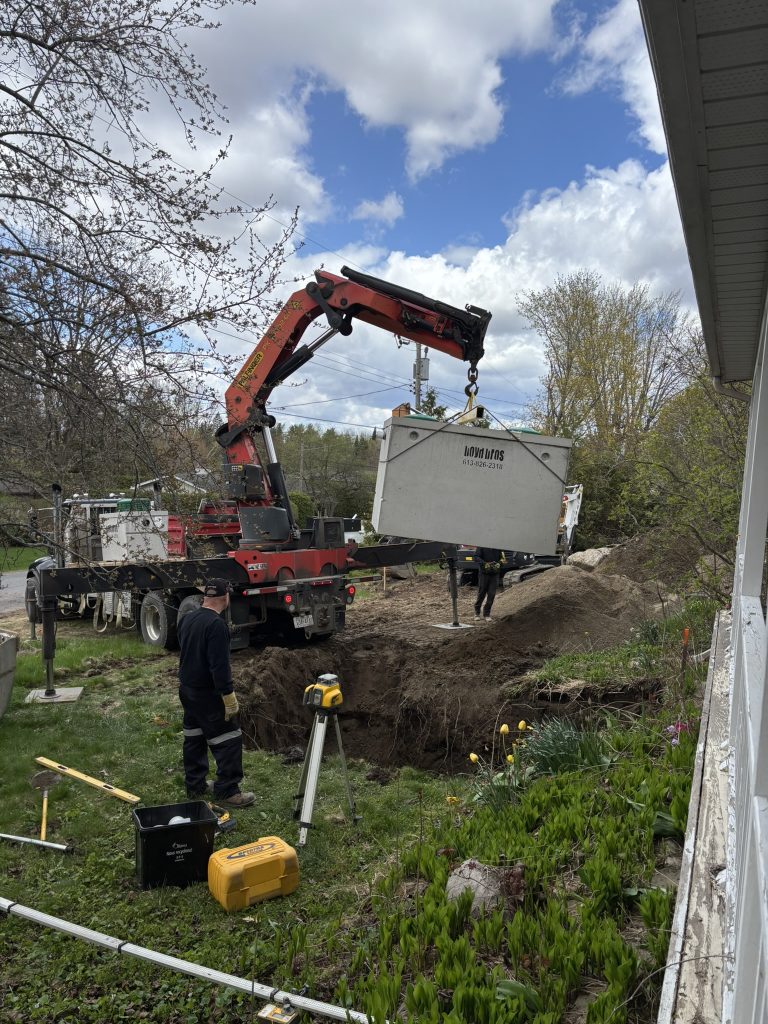
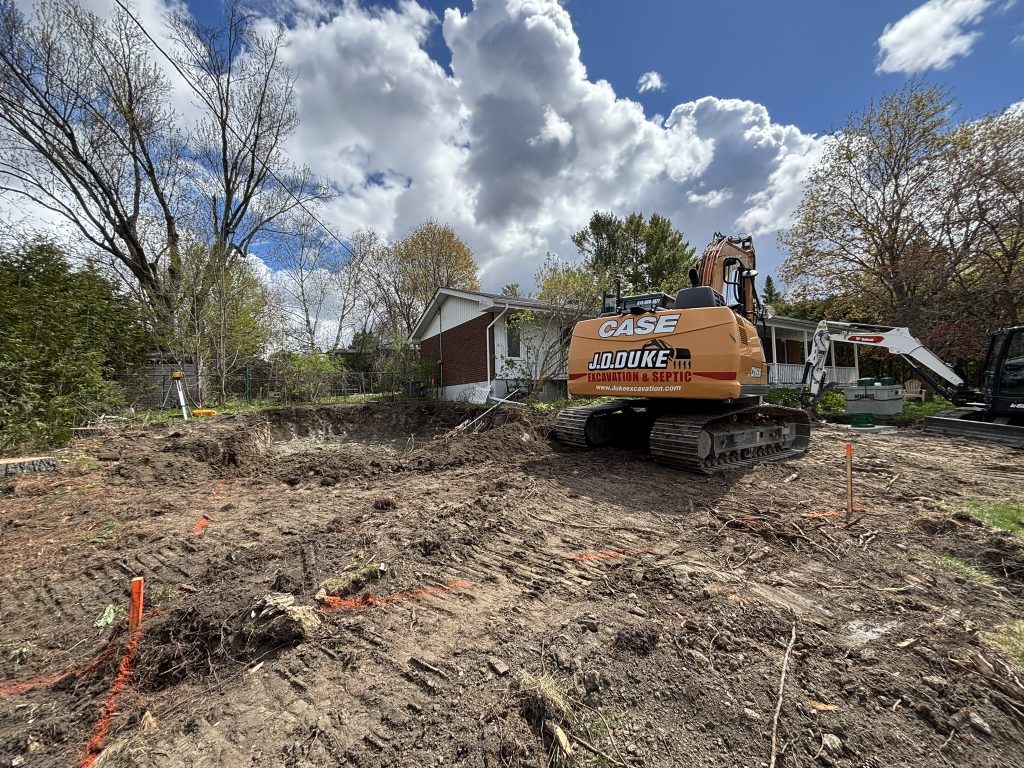
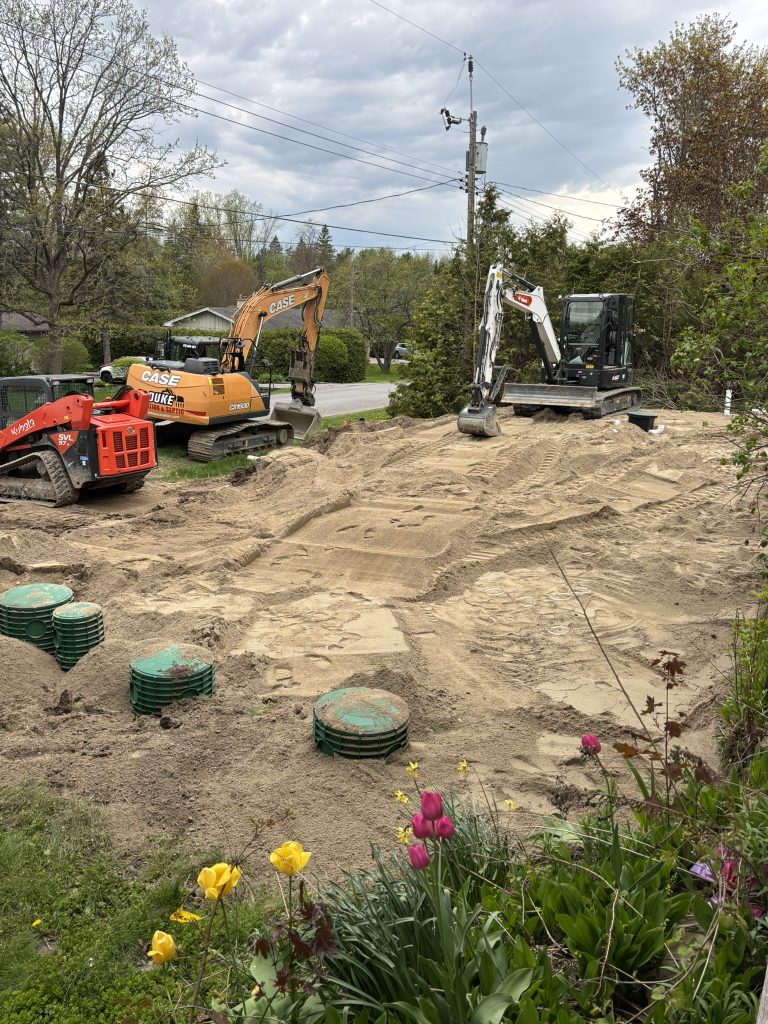
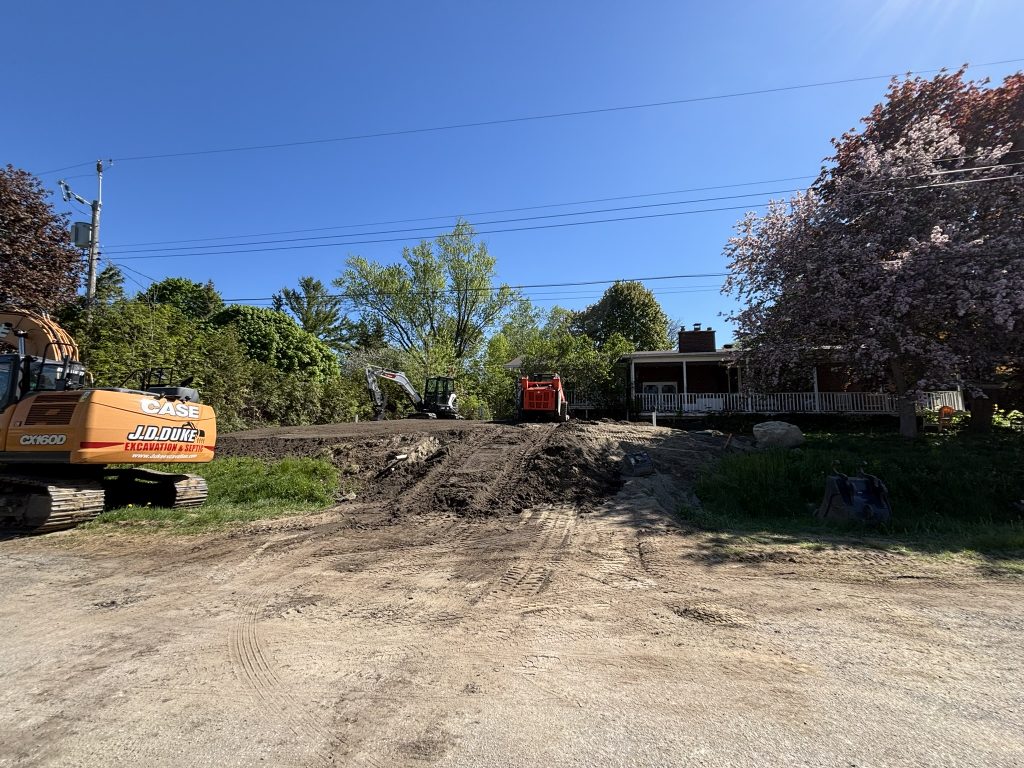
It was a massive job (at least from the homeowner’s perspective) and the change to the look of the property was a bit of a shock.
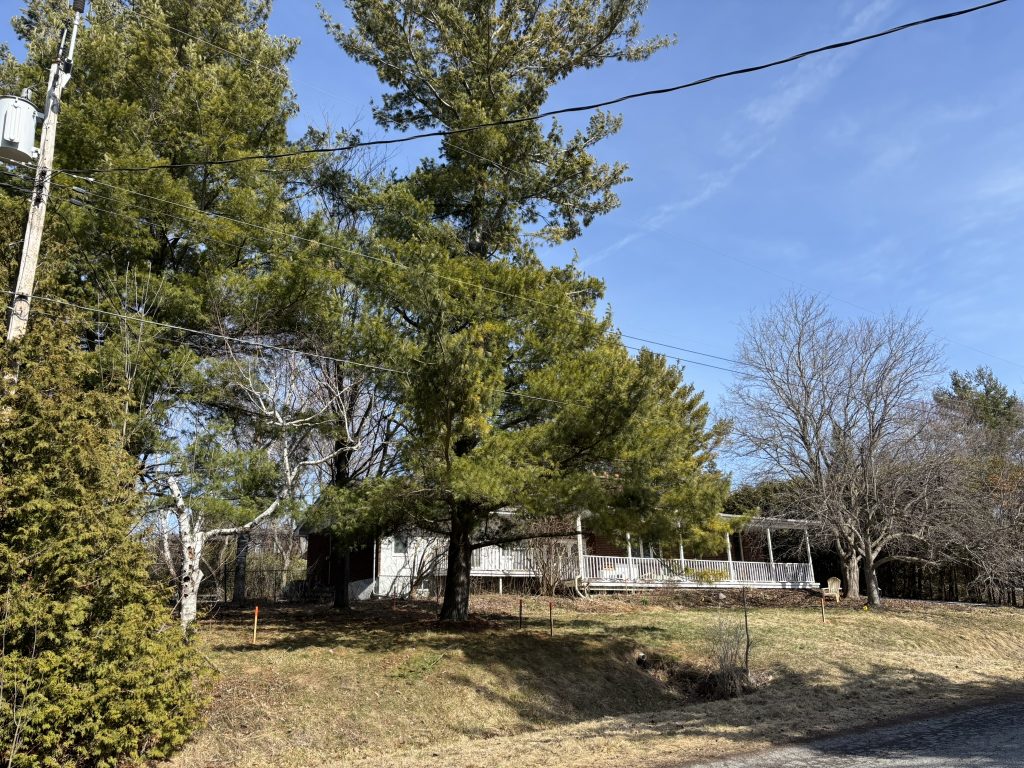
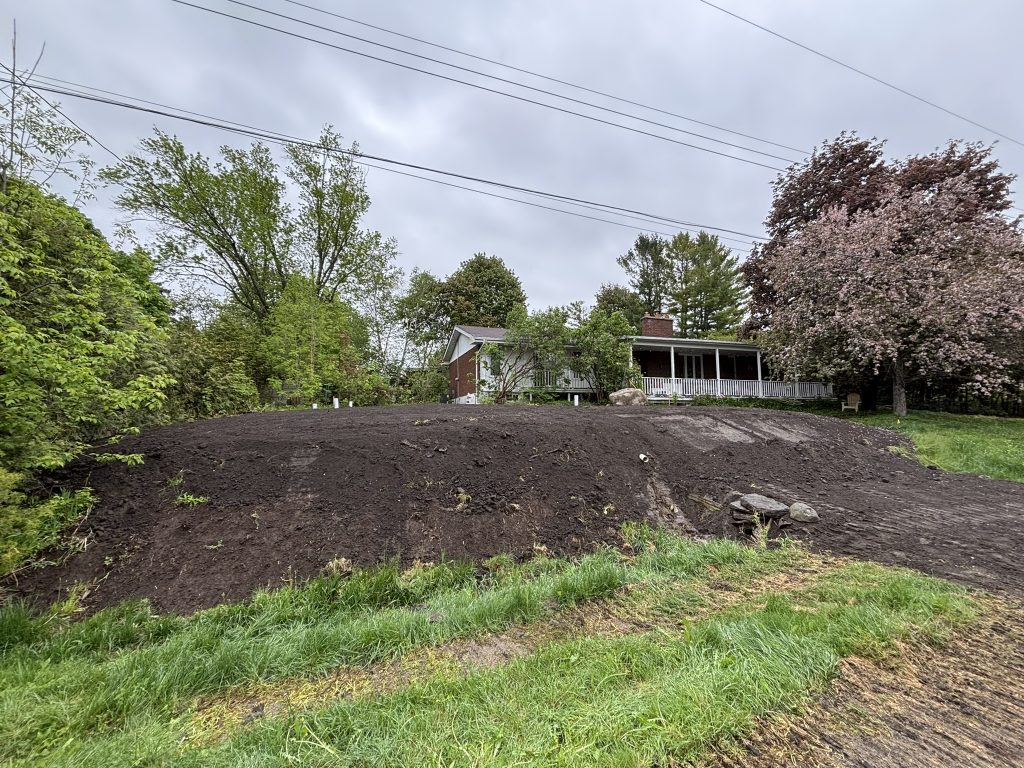
However, it did give us a huge blank canvas for reinventing the lawn. A little too huge, in fact. That’s where I’ll take up the story next time.